.png)
 English

Why Philippine food prices are high
Why Philippine food prices are high
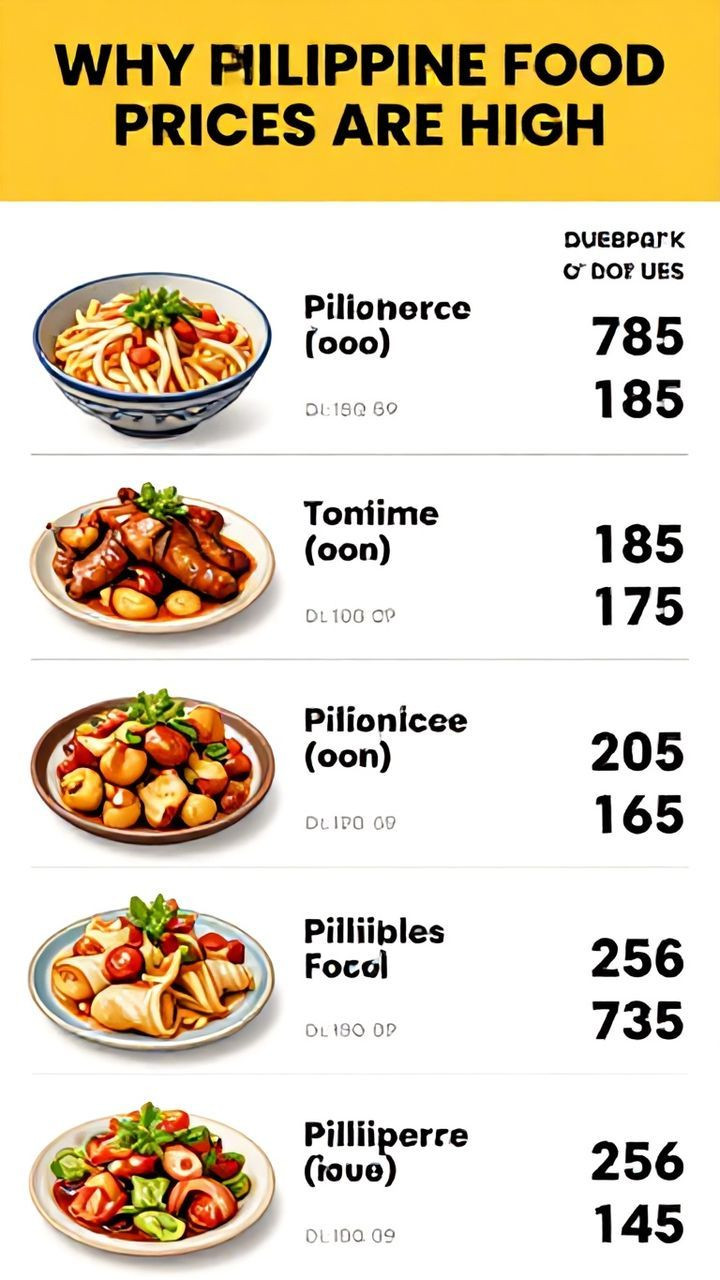
Why Philippine Food Prices are High A Tragic Tale of Agricultural Woes
As I sit down to write this blog post, I am reminded of a wise old farmer's adage A good harvest requires careful planning, just like a successful investment requires strategic consideration. In the Philippines, where food prices have reached alarming heights, it is high time we examined the root causes of this crisis. Join me on a journey to uncover the three major reasons behind our country's exorbitant food prices.
Comparing Our Country with Neighbors A Tale of Two Countries
Let us start by comparing ourselves with neighboring countries. In Vietnam, the average retail price of chicken is 40% lower than in the Philippines. Meanwhile, pork prices are a staggering 92% higher here compared to Vietnam. And if we look at Thailand, refined sugar costs around P30 per kilogram, while we're lucky to get it below P80/kg in local stores.
The implications are clear Filipino wage earners and consumers have long suffered from exorbitant food prices. The obvious consequence is that a nutritious diet is beyond the means of poor Filipinos, who constitute half our population. Hence, malnutrition and stunting among children 0 to 5 years old are rampant issues we cannot ignore.
The Three Major Reasons for High Food Prices
Now, let us dive into the three major reasons behind our country's food price woes
1. Low Farm Productivity
Our farm productivity is low compared to neighboring countries. This means we're not producing enough to feed our population. Demand outstrips supply, leading to high prices. Fragmented farmlands, caused by protracted agrarian reform implementation, contribute to this issue. Small plots of land cannot enjoy economies of scale, making it difficult for farmers to adopt modern farm equipment or technologies.
Imagine a farmer trying to manage a hectare of land with outdated tools and techniques. It's like trying to build a skyscraper on shaky ground – the foundation is weak, and the structure will inevitably collapse. In contrast, countries like China and Vietnam have consolidated small farmlands into one production unit, allowing for efficient use of resources.
2. Complex Marketing Structure
Our marketing structure is complex, with too many layers of traders adding costs to agricultural products. This can be attributed to two factors the need for more people and extra effort to consolidate harvests due to small farm sizes and poor logistical facilities in rural areas. Traders who own vehicles can dictate their buying prices to farmers, making it difficult for them to negotiate better deals.
Think of this marketing structure like a game of Whac-A-Mole – each trader adds another layer, making it challenging for farmers to break through the barriers and reach fair prices. By clustering small farms into one production unit and constructing better logistical facilities, we can simplify the process and reduce costs.
3. Regulatory Framework
Our regulatory framework is protectionist in nature, supposedly protecting small farmers but ultimately benefiting big traders and producers. Higher tariff walls and import bans create artificial barriers that drive up food prices for consumers. Republic Act 8435 aimed to modernize agriculture, but almost 30 years later, our farmers remain uncompetitive.
Envision a farmer trying to grow crops on dry soil – no matter how hard they try, the foundation is weak, and their efforts will be in vain. Similarly, our regulatory framework has created an environment where big traders and producers thrive at the expense of small farmers and consumers. It's time to revisit and revamp this framework to prioritize productivity and efficiency.
Conclusion A Lesson in Strategic Amortization
As we conclude this journey into the world of Philippine food prices, let us not forget the wise farmer's adage about strategic consideration. Just as a good harvest requires careful planning, so too does a successful investment require thoughtful strategy.
The takeaway from our exploration is that high food prices are not just a symptom of poor agricultural productivity and marketing structures but also a result of a flawed regulatory framework. It's time for us to rethink our approach and prioritize the well-being of small farmers, traders, and consumers alike.
As we move forward, let us remember that amortizing our agricultural woes requires a multifaceted approach – one that combines careful planning, strategic action, and a commitment to creating a more equitable food system.
SEO Optimized Keywords
Philippine food prices
Agricultural productivity
Marketing structure
Regulatory framework
Food security
Economic development
* Investment strategy

Popular Tools
Recent Posts