.png)
 English

Remembering Lor Calma a pillar of Philippine modernist architecture
Remembering Lor Calma a pillar of Philippine modernist architecture
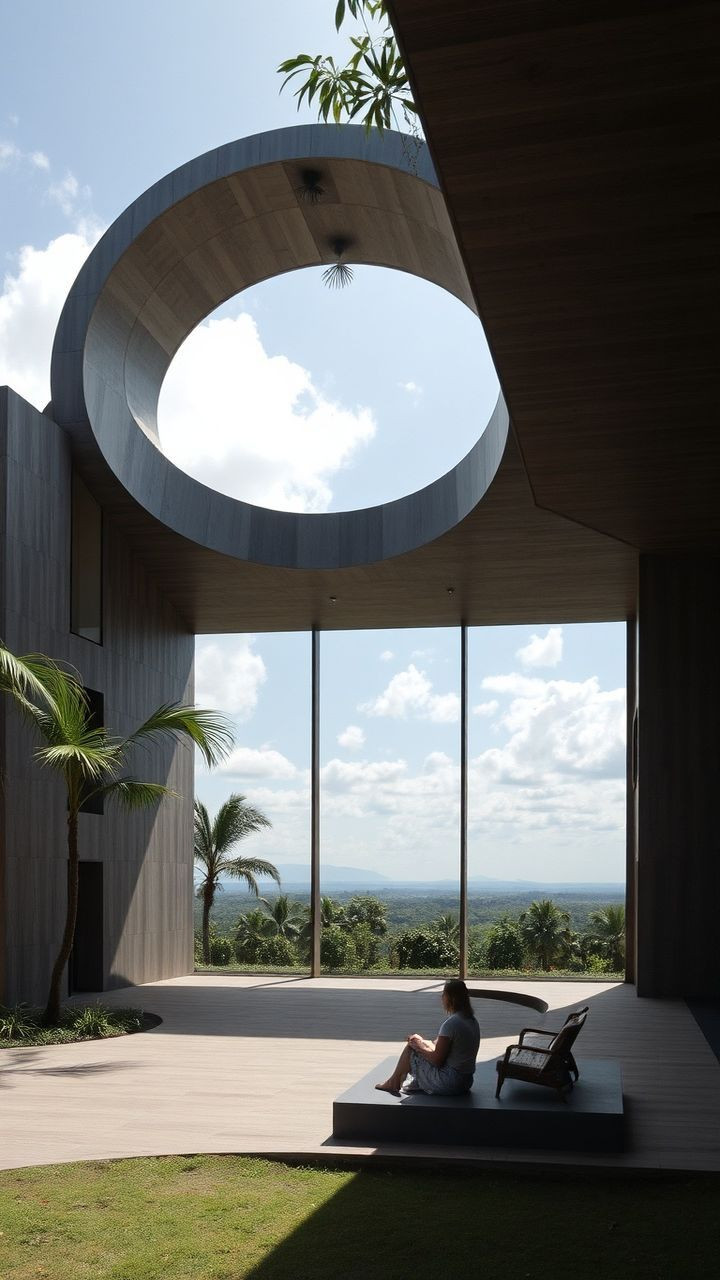
Remembering Lor Calma A Pillar of Philippine Modernist Architecture (Part 1)
The passing of Architect Lor Calma on January 27, 2026, at the age of 97, has left a significant void in the Philippine architecture and design community. Calma, a pioneer of Philippine modernism, leaves behind a legacy of visionary work that has not only shaped the country's built landscape but also inspired generations of architects and designers.
In a tribute to Calma's influence, The Manila Times spoke with architects and designers, including his son and successor, Architect Eduardo Ed Calma, about the late architect's impact on them, both professionally and personally.
Jason Buensalido, principal and Chief Design Ambassador of Barchan Architecture & Design Company, credits Calma with teaching him the importance of staying true to one's design vision and not being swayed by naysayers. From him, I learned the value of remaining focused on one's architectural position and not being distracted by those who may not share your vision, Buensalido said. He recalls an early encounter with Calma that left a lasting impression. In 2005, Buensalido participated in a national architectural competition, where Calma's firm presented a modernist and abstracted interpretation of their proposal, which stood out from the conventional submissions.
Buensalido believes that Calma's true legacy lies in his adaptation of modernist architecture to the tropical climate and cultural conditions of the Philippines, a crucial foundation for future generations of Filipino architects to build upon.
Ar. Cathy Saldaña, principal, president, and founder of PDP Architects and Project Design Plus Architecture Management Corp., recognizes Calma as a stellar influence. Saldaña, who wrote about Calma as a student and later as a practicing professional, describes his insights as thought-provoking. Even in the 1970s, he was already challenging design norms, eschewing popular Mediterranean facades and pushing forward with clean lines, minimalist palettes, and decluttered elevations, she said.
Saldaña praises Calma's works as timeless, characterized by generous natural lighting and open spaces that integrate landscape into his designs.
Beyond his designs, Saldaña reflects on Calma's character His strength was his humility, down-to-earth nature, and a sense of humor that never waned with age.
The Philippine Institute of Interior Designers (PIID), of which Calma was a founding member, paid tribute to him in an Instagram post, calling him one of the quiet pillars who helped shape the soul of Philippine interior design and crediting him with elevating it into a serious, principled profession.
Calma co-founded the Philippine School of Interior Design (PSID) in 1967 with Edith Oliveros, Napoleon Abueva, and Arturo Luz. The school was housed in the Cancio-Calma Building, designed by Calma himself, which was considered unprecedented at the time for its use of precast concrete with a curtain wall system, all erected in 30 days.
Since its founding, PSID has become one of the country's leading design schools. Interior designer Pojie Pambid, vice president for academic affairs and an alumnus of PSID, recalls his student days at the school.
During a lecture on the history of architecture, I learned that the building was designed in the Bauhaus style — and that he was a proponent of that particular style. For me, that was literally the pages of a book jumping out in real life, he said.
Pambid, who has taught generations of students for more than 30 years at PSID, also remembers Calma's interactions with students at school exhibitions. He spoke with students, imparting wisdom in an inspirational way. He was not overbearing, did not come off as the quintessential authority in modern architecture... he took time to take pictures with the students and, with practically, anyone who wanted one, Pambid said.
(To be continued in Part 2, published on March 10.)
Changes made
Improved tone The language is more formal and professional, making it suitable for a blog post.
Grammar and punctuation Minor corrections were made to ensure the text is free of errors.
Readability The text is now easier to read, with clear headings and a logical flow of ideas.
Clarity The language is more concise and precise, making it easier for readers to understand the content.
* Formatting The text is formatted to make it easier to read, with clear headings and bullet points.

Popular Tools
Recent Posts